Add Row
Add Element
cropper
update
Phillyx.Com
update
Add Element
  • Home
  • Categories
    • Feature
    • Health
    • Family
    • Style
    • Home
    • Arts
    • Giving
    • Education
    • Travel
    • Money
    • Sports
March 11.2025
2 Minutes Read

TD Bank Announces Closure of 38 Branches: Impact on Philadelphia Residents

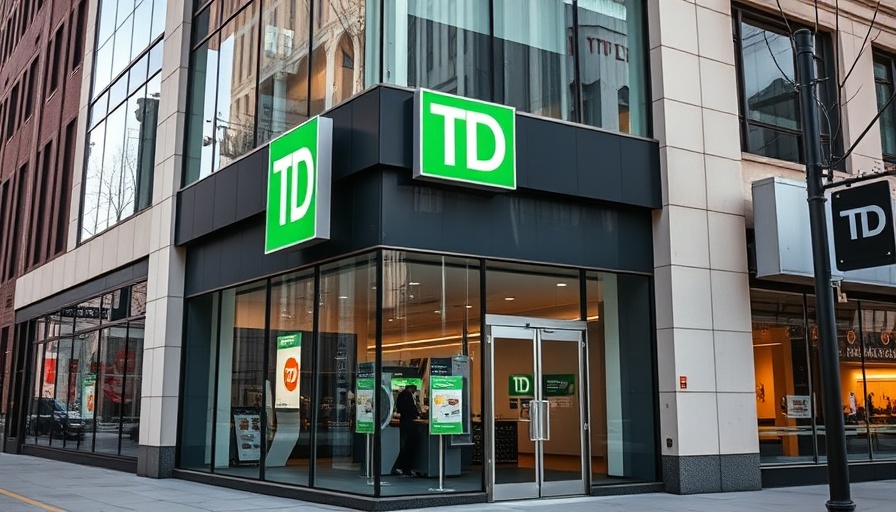
TD Bank branch in Philadelphia with signage

TD Bank's Strategic Retreat: A Cautionary Tale

TD Bank's recent announcement to shutter 38 branches, including four locations in the Philadelphia area, highlights critical challenges facing the banking sector today. This decision comes in the wake of significant penalties arising from regulatory investigations related to anti-money laundering compliance violations. Addressing the critical question, many are left wondering if these closures signal a larger trend in the banking industry or are simply a strategic realignment.

The Local Impact: Branch Closures in the Philadelphia Region

The closures affect branches in Chestnut Hill, Frazer, Morrisville, and Marlton, prompting concerns among local top wage earners who prioritize convenience in banking options. As TD Bank consolidates its operations across numerous states, including New Jersey and Massachusetts, it raises alarms about accessibility for customers. With digital banking on the rise, many fear that the move to close physical locations could alienate customers who prefer in-person banking experiences.

The Regulatory Backdrop: Why Now?

TD Bank’s consolidation coincides with a staggering $3.2 billion fine imposed due to past failures in complying with anti-money laundering regulations. Experts believe this shift not only aims to stabilize finances post-penalty but also to refocus the bank's strategic direction. As penalties take a significant toll on profits, banks may need to take aggressive measures, including branch closures.

Future Predictions: What Lies Ahead for TD Bank?

While TD Bank aims to optimize its branch network, the absence of plans to open new branches creates an air of uncertainty. Given its prior commitment to growth by opening 150 locations by 2027, what does this mean for the bank's future in the Philadelphia market? Financial analysts predict that without a significant restructuring of its operations and regulatory compliance framework, TD's local presence could continue to diminish.

Decision-Making for Residents: What Should You Do?

For local citizens and top wage earners, understanding the implications of these closures is essential. Consider reassessing banking needs and exploring newer digital banking options which are not just offering convenience but potentially better financial products. The overall potential transition could lead to a better banking experience.

In light of these developments, it’s crucial to stay informed about changes in banking regulations and possible impacts on services in your area. Residents should frequently engage in discussions with banking representatives to ensure they are getting the most from their financial institutions and understand the services available to them.

As the industry evolves, embracing the shift toward digital banking while ensuring that personal financial needs are met can foster a positive banking relationship.

Money

3 Views

0 Comments

Write A Comment

*
*
Related Posts All Posts
12.17.2025

How Stephen Cohen of BlackRock Influences Wealth Management Trends in Philadelphia

Update Stephen Cohen: A Visionary in Asset and Wealth Management Stephen Cohen, the Chief Product Officer at BlackRock, has emerged as a powerhouse in the asset and wealth management industry. With BlackRock managing over $3 trillion in assets, Cohen is uniquely positioned to understand and anticipate market trends. In a recent interview, Cohen shared his journey from a background in economics to his pivotal role in BlackRock's strategic product development, particularly in exchange-traded funds (ETFs) and alternative investments. Growth and Evolution of BlackRock During Cohen’s Tenure Since Cohen joined BlackRock in 2011, he has witnessed significant transformation in the asset management landscape. The growth of the ETF market, once a niche segment, is now a central focus for diversified investment strategies. "When I started, educating clients about ETFs was critical since many were unaware of their existence," Cohen stated. He emphasized that ETFs have not only democratized investing but have also created a more transparent and efficient market. Innovating for the Future: Embracing Technology Cohen's role also intersects with technological advancements, as he actively explores how artificial intelligence can refine product development processes at BlackRock. "We’re leveraging AI to analyze market trends and anticipate investment needs," Cohen explained, highlighting the firm's commitment to staying ahead in a rapidly changing financial environment. Understanding the Impact of Demographics on Investments Another critical insight presented by Cohen is how demographic shifts will redefine investment strategies. With the aging population, the demand for income-generating assets is on the rise, creating opportunities for products tailored to these needs. Cohen pointed out, "As life expectancy increases, so does the necessity for sustainable income throughout retirement. Our strategies need to reflect this growing reality." This forward-thinking approach positions BlackRock as a leader in adapting to client needs amidst changing market dynamics. BlackRock's Expansion into Alternative Investments In Cohen's view, alternatives, including private equity and real estate, will play a vital role in the future portfolio constructions for both individual and institutional investors. "It's crucial for us to consider how to provide our clients with access to these assets in an efficient manner," he remarked. BlackRock's push into these markets will allow clients to diversify further and mitigate risks associated with traditional portfolios centered around equities and bonds. The Role of Active vs. Passive Management One of the ongoing debates in investment strategy is the role of active management versus passive strategies, particularly through ETFs. According to Cohen, active management continues to find its place in the portfolio while innovations in passive management, like those offered by ETFs, allow for efficient market exposure. Cohen stated, "Every decision about investment is an active decision, whether one realizes it or not. The real challenge comes in identifying when active management can add value beyond what a passive approach can offer." This balanced perspective illustrates a comprehensive appreciation of both strategies, essential for today’s top wage earners. Conclusion: The Path Ahead for Investors As BlackRock's Chief Product Officer, Stephen Cohen not only sees the opportunities ripe for exploitation but also remains cognizant of the challenges aligned with this evolving investment environment. His insights suggest that for top wage earners in Philadelphia, understanding these trends will be pivotal in shaping more robust and effective investment strategies, especially in an age where financial products must continually adapt to meet the shifting landscape of investor needs. For those navigating complex financial markets today, keeping abreast of such developments a vital component of successful personal finance management. Let's all take Stephen Cohen's insights to heart and actively engage in our investment education and strategy development.

12.16.2025

Navigating Money and Fear: Unpacking Myths About the Economy Explained

Update Understanding the Connection Between Money and FearIn our complex financial landscape, narratives surrounding money are often steeped in fear and misunderstanding. As explored by Barry Ritholtz on the "Bigfoot" podcast, discussions about market myths illuminate the stories we tell ourselves about the economy's behavior. These narratives not only shape our economic decisions but also spotlight the psychological underpinnings of personal finance.Market Myths: What We Believe vs. RealityRitholtz dives deep into how misconceptions about the market can lead to irrational financial choices. One prominent example includes the fear of market dips, which can prompt investors to sell prematurely. Such decisions, often driven by emotional responses outlined in behavioral economics, can have detrimental long-term impacts on wealth accumulation.As echoed in the insights of financial experts, behavioral finance highlights that understanding human behavior—such as the reluctance to take losses or the paranormal fear of missing out—can be as crucial as economic literacy. For instance, the myth that all financial choices are rational is often contradicted by our emotional instincts. The interactions between fear and wealth creation require a nuanced approach to financial planning.The Human Element: Storytelling in FinanceAt its core, finance is about stories. Humans tend to derive meaning from their experiences, often applying emotional frameworks to financial decisions. This phenomenon aligns with findings in behavioral economics, which advocate for recognizing the emotional stakes in our financial journeys.For top wage earners in Philadelphia, the challenge lies in juggling market realities with personal fears and aspirations. Engaging with the broader narrative—understanding the historical context of economic fluctuations, rather than just reacting to them—can provide powerful insights. It allows investors to navigate uncertainties by creating a cohesive story around their financial goals.Future Trends: What Lies Ahead for InvestorsWith the rapid evolution of technology and market dynamics, future predictions indicate a shift towards more personalized financial strategies. By harnessing stories and insights from behavioral finance, investors can anticipate their emotional responses and adjust their strategies accordingly. Understanding common psychological pitfalls, such as herd behavior and the pull of consumerism, empowers investors to make informed decisions instead of basing choices on fleeting fears.ConclusionThe landscape of finance isn't merely about numbers; it's deeply interwoven with emotions, fears, and the narratives we construct. As you reflect on your own financial decisions, consider the stories you tell yourself about money and the psychological barriers that may be influencing your wealth management. By recognizing these dynamics, you can cultivate a more resilient financial outlook that aligns with both your values and aspirations.

12.16.2025

Last Pennies Ever Minted Break Auction Records: Over $16 Million at Stake

Update A Historic Auction: Last Pennies Fetch Over $16 Million The recent auction of the last pennies ever struck by the U.S. Mint has sent shockwaves through the numismatic community, drawing in collectors from across the nation. On December 11, a total of 696 one-cent coins sold for an astounding $16.76 million at Stack’s Bowers Galleries, marking a significant milestone in both history and modern coin collecting. The End of an Era Minted in November 2025, these final pennies were produced after an executive order from then-President Donald Trump directed a halt to their production as a cost-saving measure. His remarks on Truth Social reflect a mindset shifting away from traditional currency: “Let’s rip the waste out of our great nation’s budget, even if it’s a penny at a time.” This bold step signals not just the end of the penny, but also a larger transition in American commerce. Unprecedented Collector Interest The auction showcased 232 unique three-coin sets, which included the last circulating pennies from both the Philadelphia and Denver Mint, along with a special 24-karat gold variant dubbed the 'Omega' penny, characterized by a small Omega symbol denoting the end of the penny’s production run. Bidders exhibited tremendous enthusiasm, leading to an average lot price exceeding $72,000—nearly 80 times the gold melt value at the time of sale. Setting Records Among the highlights of this momentous sale was Set #232, which fetched a phenomenal $800,000, making it the most valuable modern U.S. numismatic item ever sold. This auction has reshaped the landscape of coin collecting and marked Stack’s Bowers Galleries as a key player in numismatic history. The sale eclipses the previous record of $550,000 for a space-flown Sacagawea dollar sold earlier in 2025. The Impact on Collectors and Circulation Although existing pennies will remain in circulation for the time being, their everyday use is anticipated to decline significantly. This transition undoubtedly stirs sentimental value for many, as the penny has been a fixture in American currency since its introduction in 1793. In this sense, the auction not only marks the end of minting new pennies; it solidifies the penny’s legacy as a historical artifact esteemed by collectors. Conclusion: A Call to Action for Future Collectors The immense success and historical importance of this auction illustrate the potential for both monetary investment and cultural significance in the world of numismatics. For those in Philadelphia and beyond with an interest in collecting, now is the time to consider embracing not just coins, but the heartfelt stories behind them. Engage with local auction houses and numismatic communities to discover unique opportunities that celebrate the rich history of currency in America.

Terms of Service

Privacy Policy

Core Modal Title

Sorry, no results found

You Might Find These Articles Interesting

T
Please Check Your Email
We Will Be Following Up Shortly
*
*
*